We are processing your request.
Please, don’t close or refresh the page.
Madrid Tickets Museo Del Prado Las Meninas
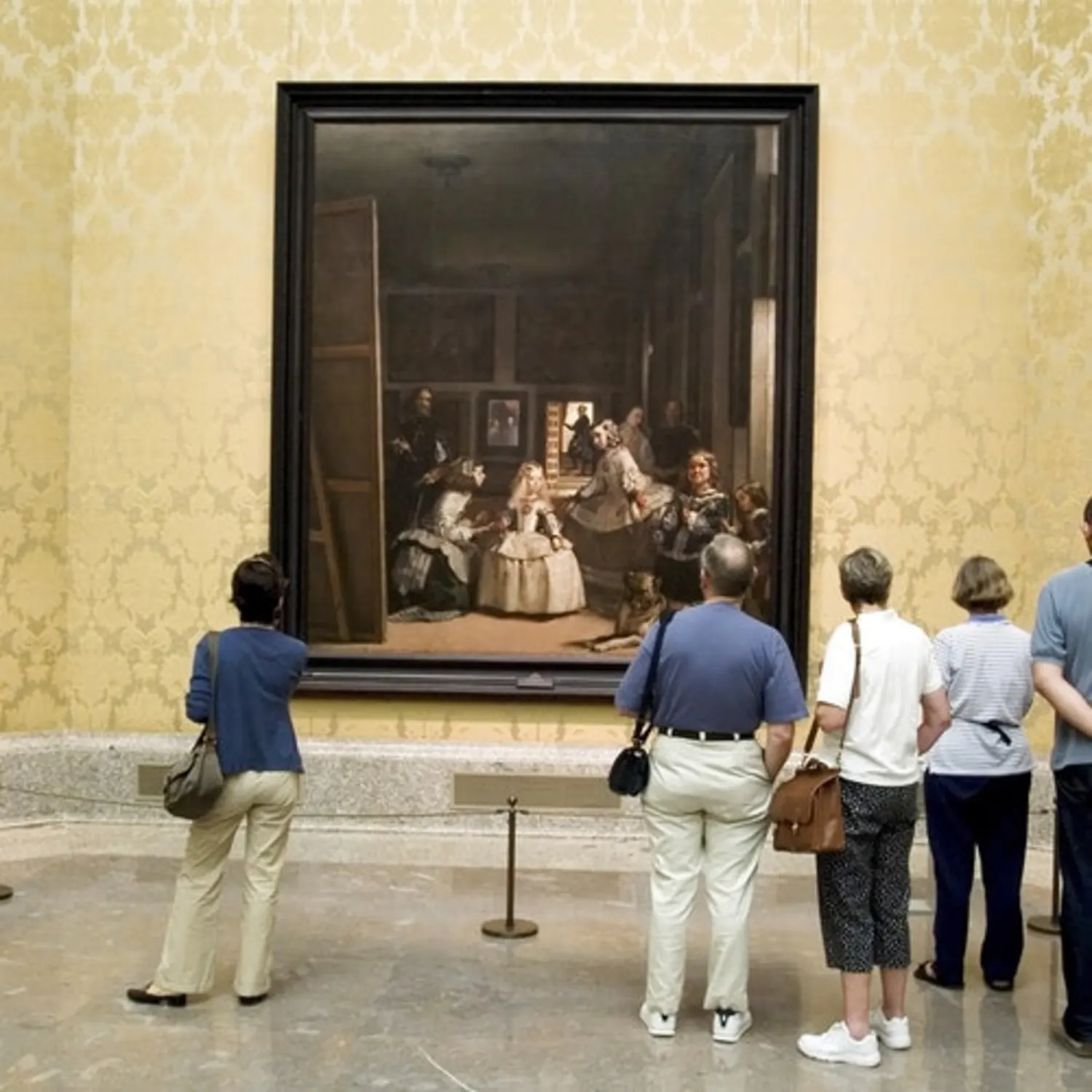
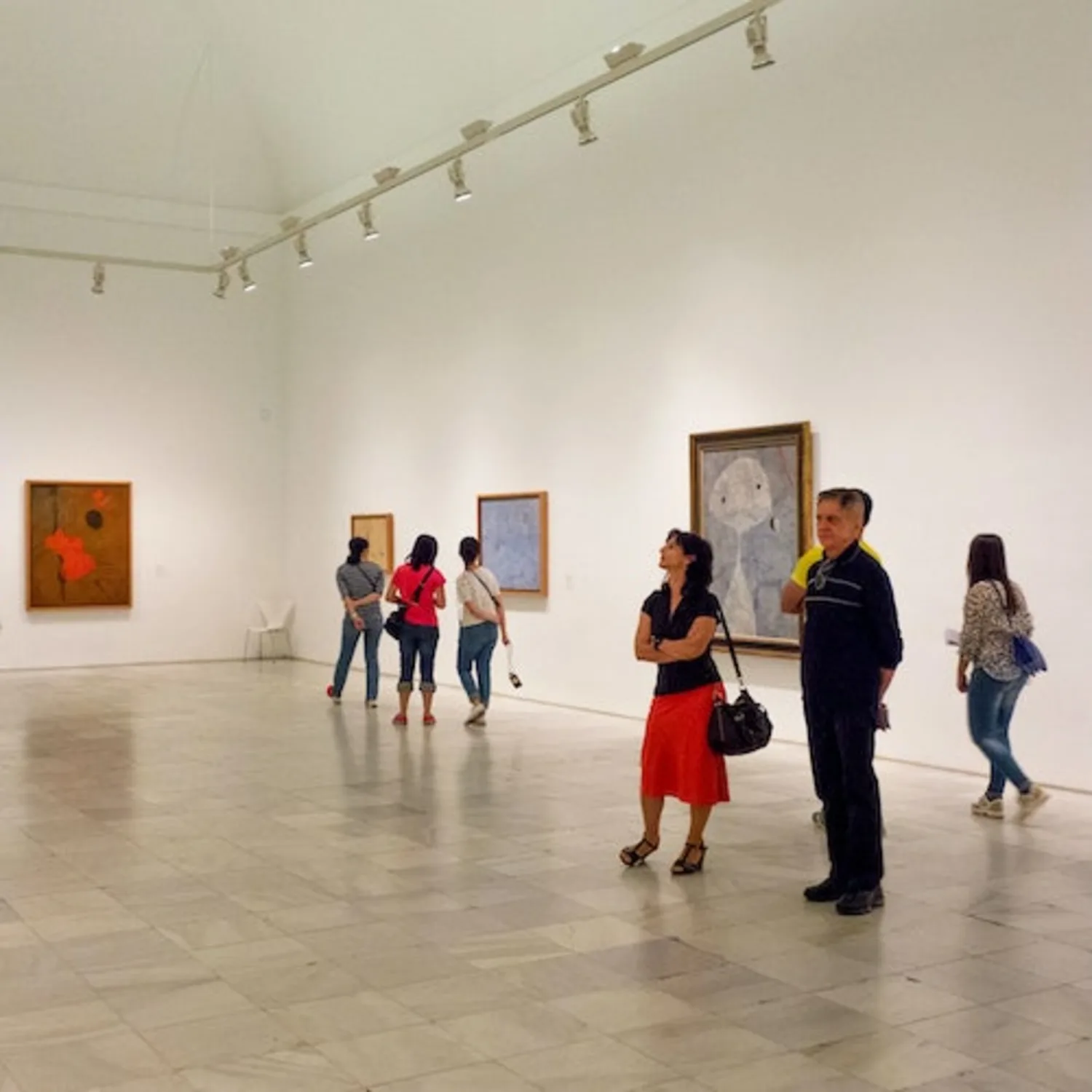
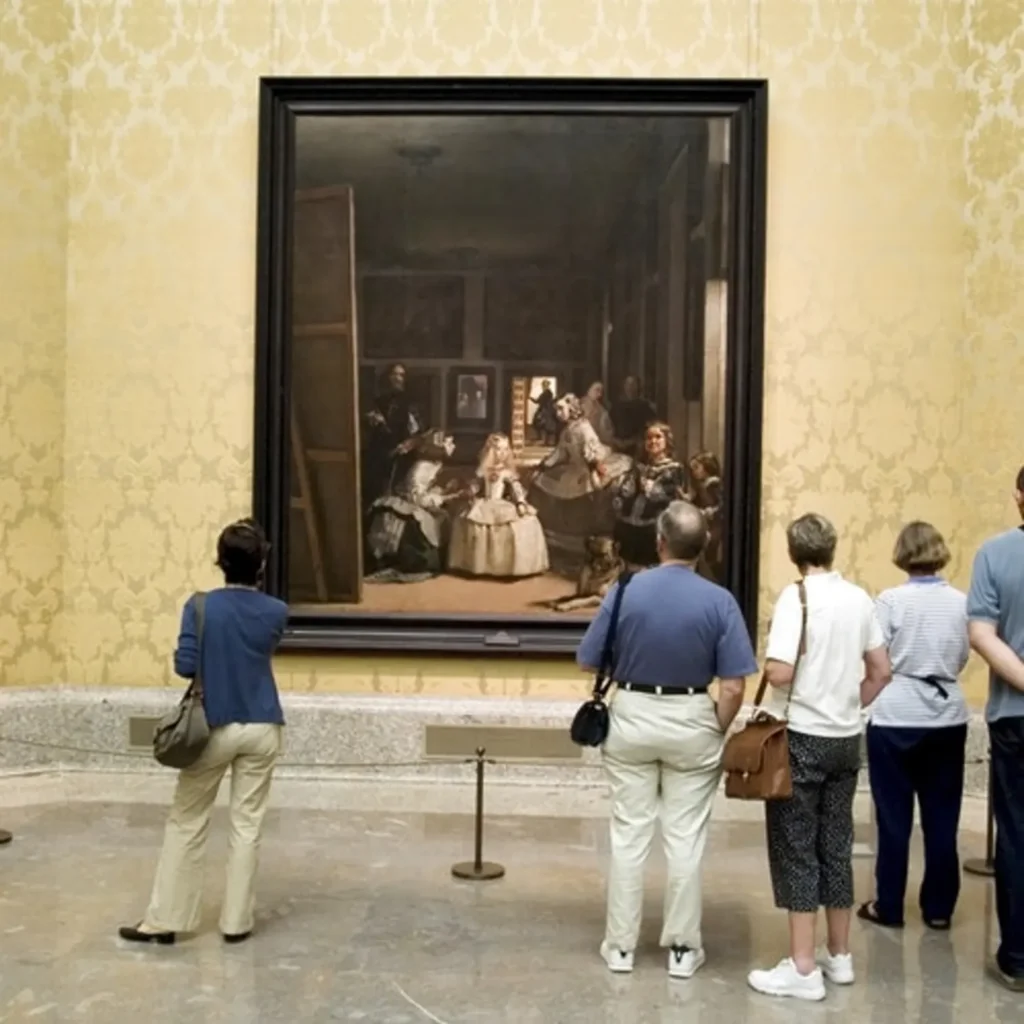
Visitors in front of Las Meninas at the Prado Museum

Las Meninas by Velázquez

Painted in 1656 inside Madrid's royal Alcázar, Velázquez's portrait of the Infanta Margarita and her household now hangs in Room 012 of the Prado. Who is who, and what to look for in front of it.

Velázquez painted Las Meninas in 1656 in the Cuarto del Príncipe of the Alcázar, the old royal palace of Madrid, and the room in the picture is that same room. At the centre stands the Infanta Margarita, attended by two of the queen's maids of honour. The painter works at a huge canvas on the left, while a small mirror at the back holds the faces of Philip IV and Mariana of Austria.

Las Meninas at a glance

Artist: Diego Rodríguez de Silva y Velázquez, born in Seville in 1599, died in Madrid in 1660.

Date: 1656, according to the painter and writer Antonio Palomino.

Technique and size: oil on canvas, 318 cm high and 276 cm wide, one of Velázquez's largest works.

Setting: the Cuarto del Príncipe in the Alcázar of Madrid, the royal palace where Velázquez worked.

Title: the 1857 inventory of the Real Museo is the first record the Prado lists that calls it the picture "of Las Meninas".

Where to see it: Room 012 of the Prado.

Who is who in Las Meninas

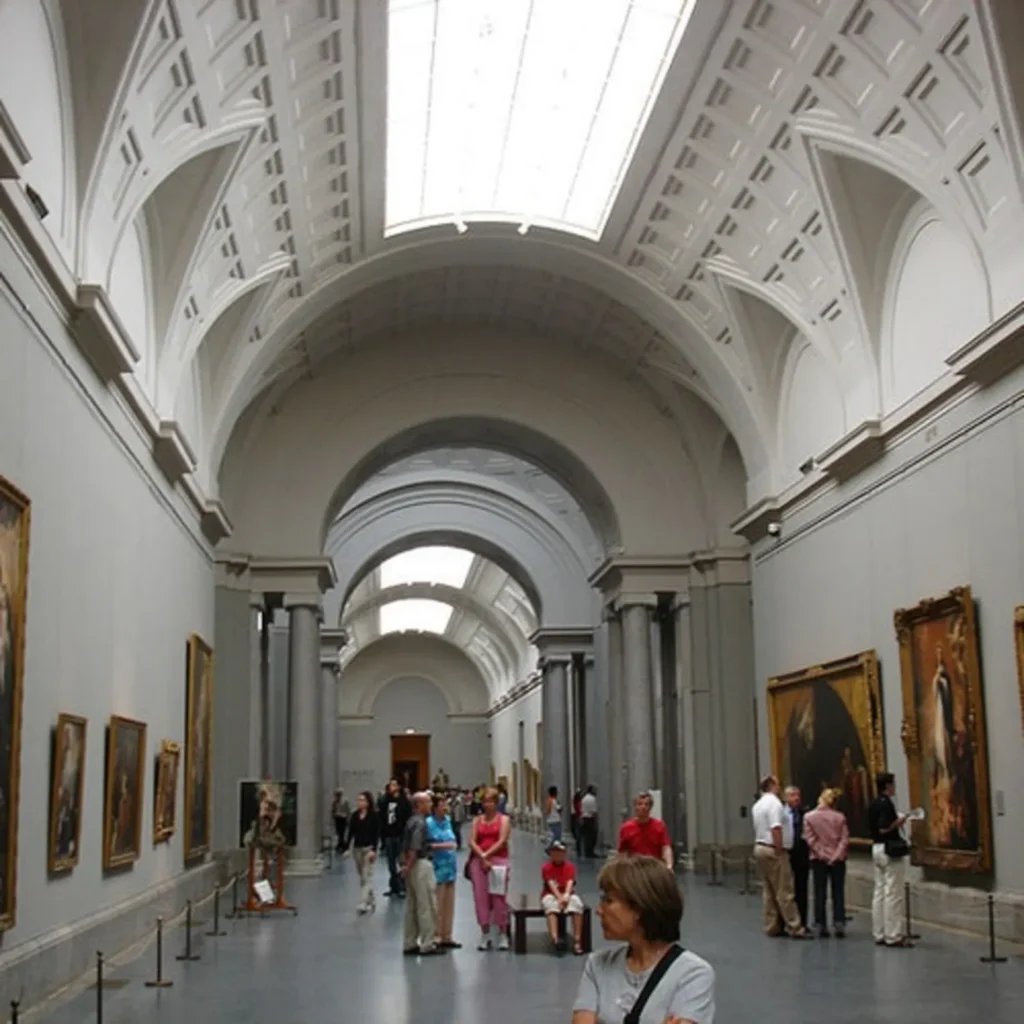
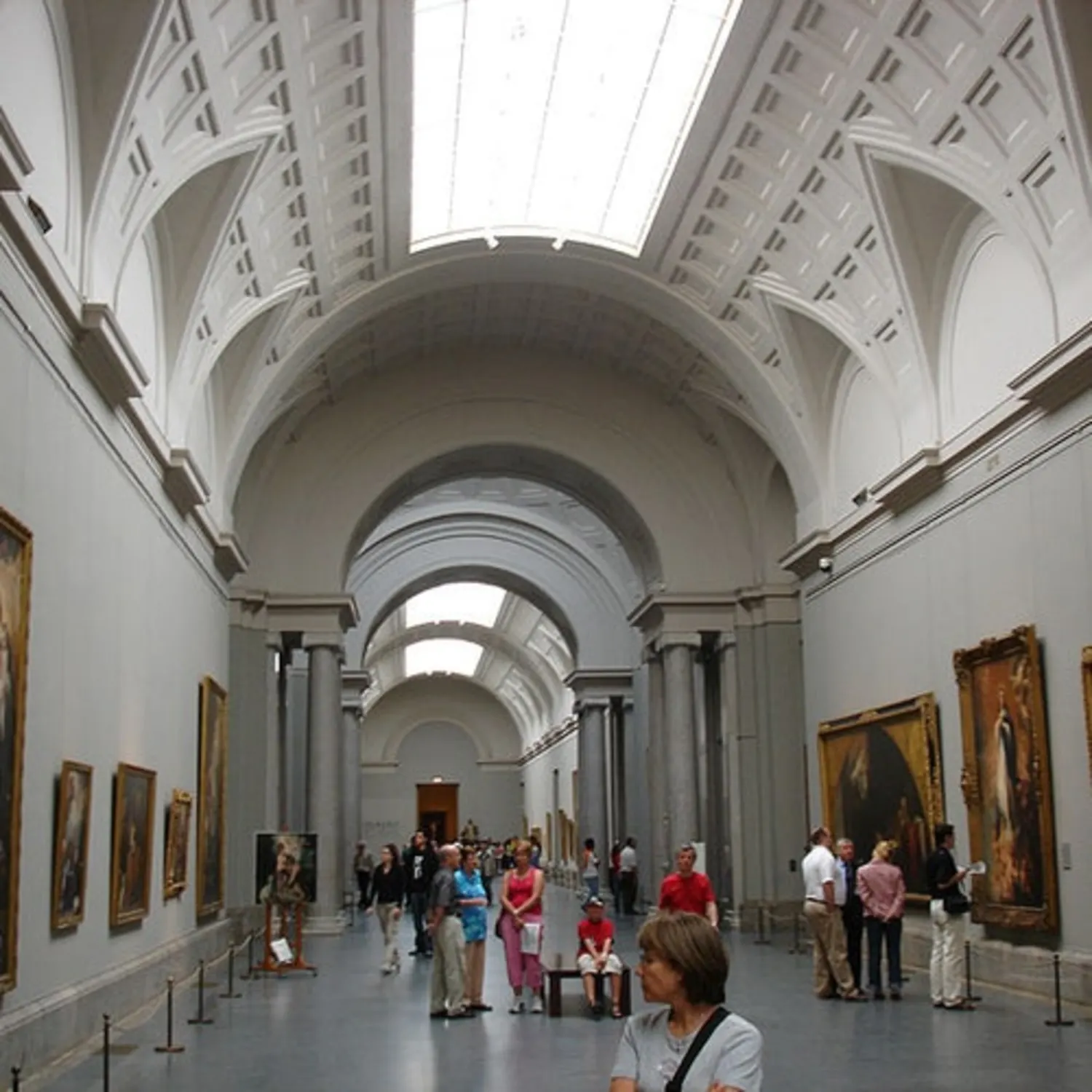
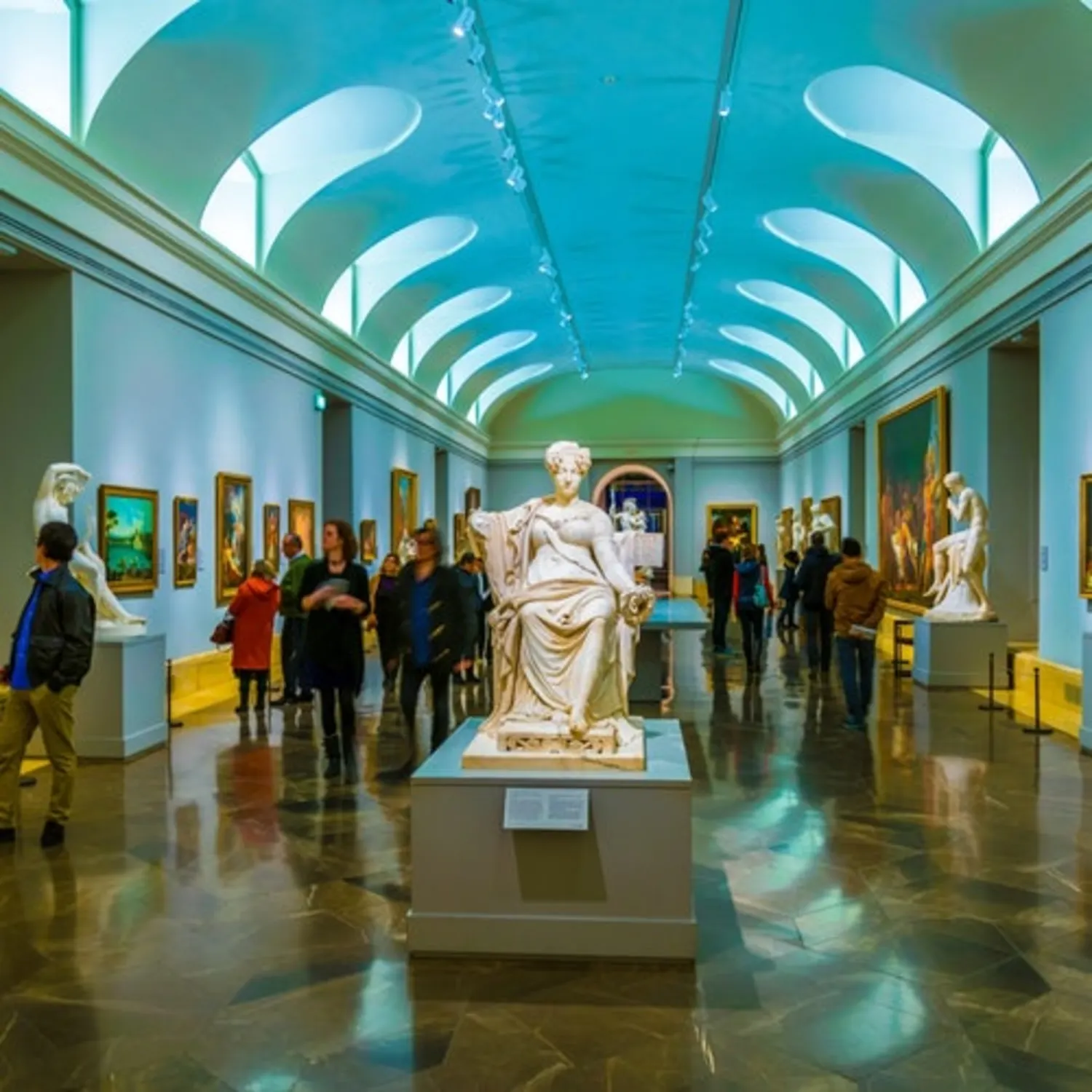
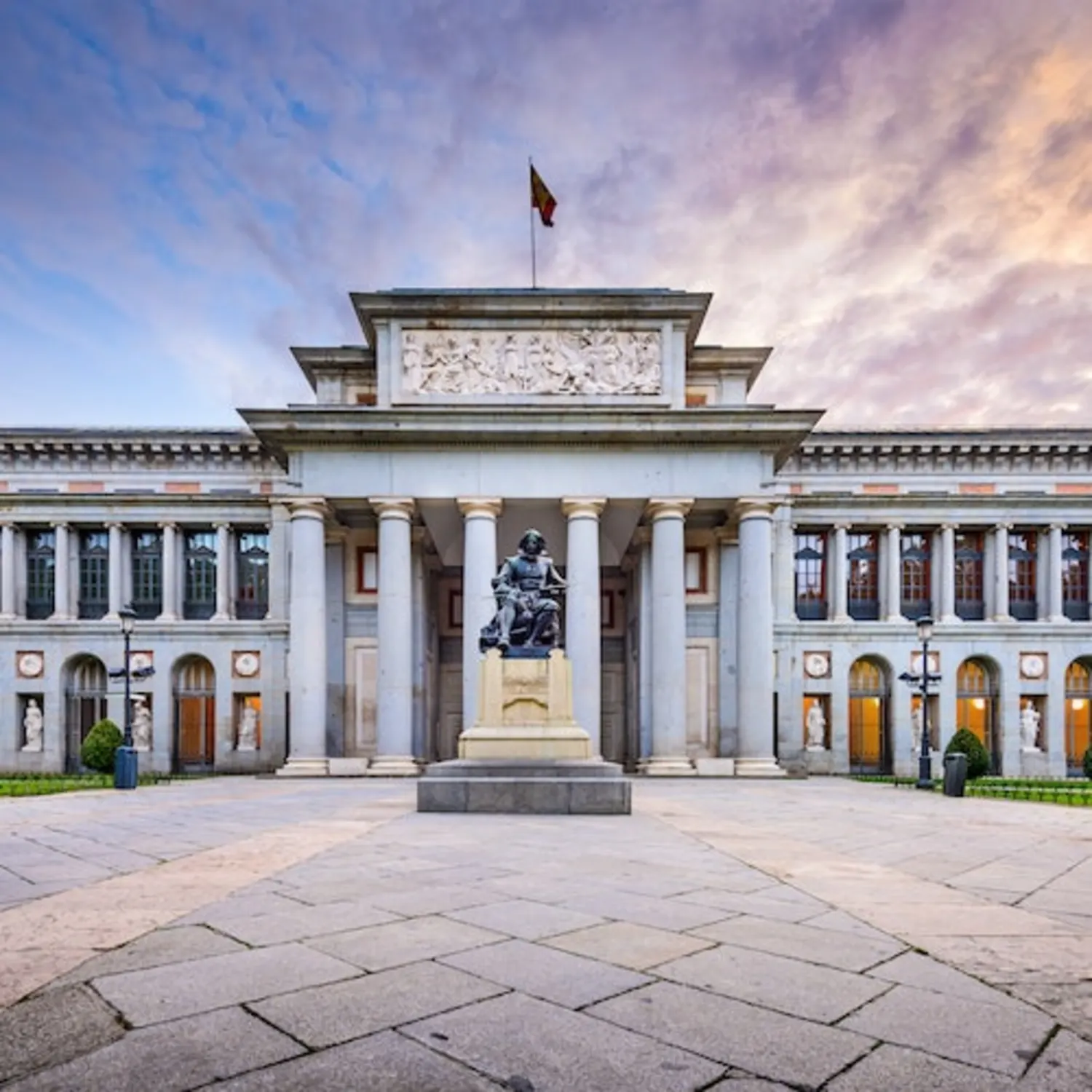
The Central Gallery of the Prado Museum

The young Infanta Margarita, daughter of Philip IV and Mariana of Austria, stands in the light at the centre. On either side are her two meninas, the queen's maids of honour María Agustina Sarmiento and Isabel de Velasco. To the right are Mari Bárbola and Nicolasito Pertusato, two dwarfs who served at court, with Nicolasito provoking a mastiff that lies in the foreground. Behind them, Marcela de Ulloa, a lady of the court, talks with a guardadamas, a palace attendant. The chamberlain José Nieto pauses in the bright doorway at the back. On the left, Velázquez painted himself standing at a large canvas, looking out at whoever stands in front of him.

The mirror and the viewer

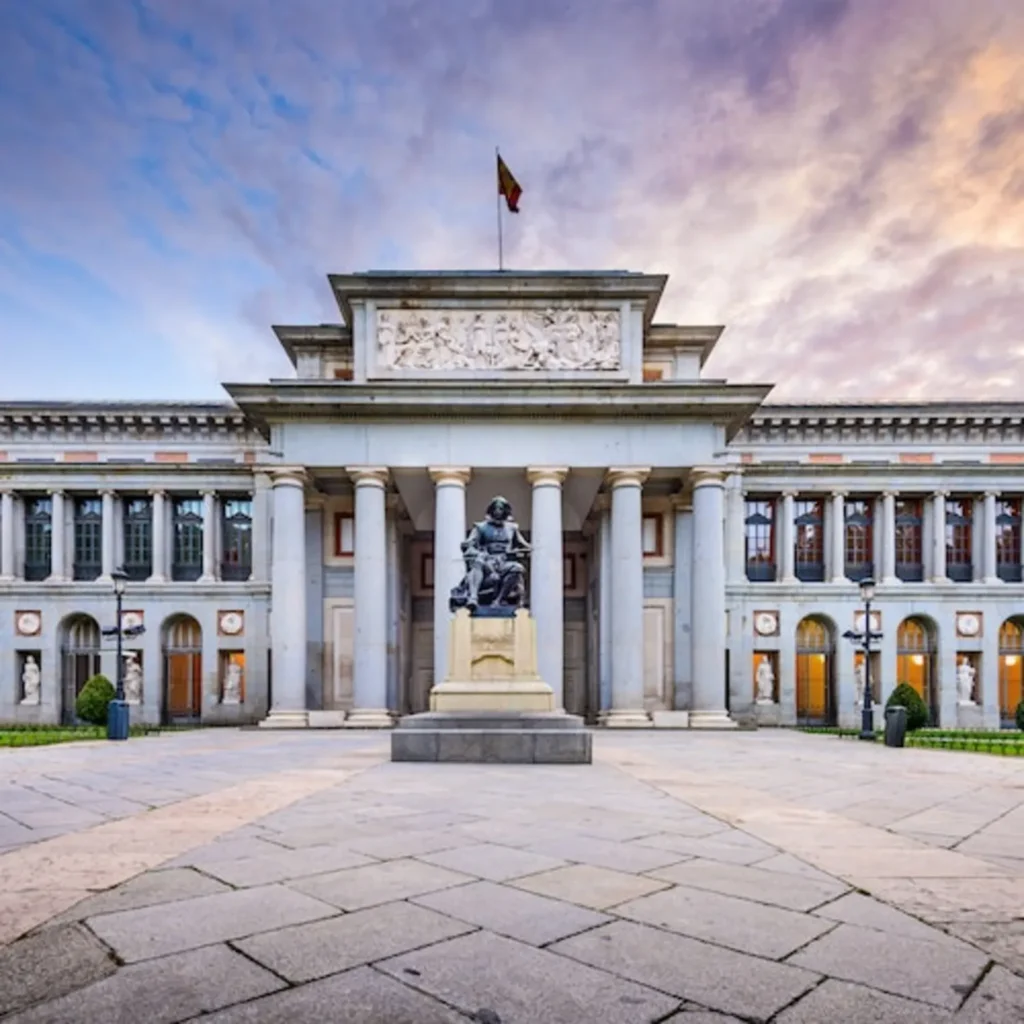
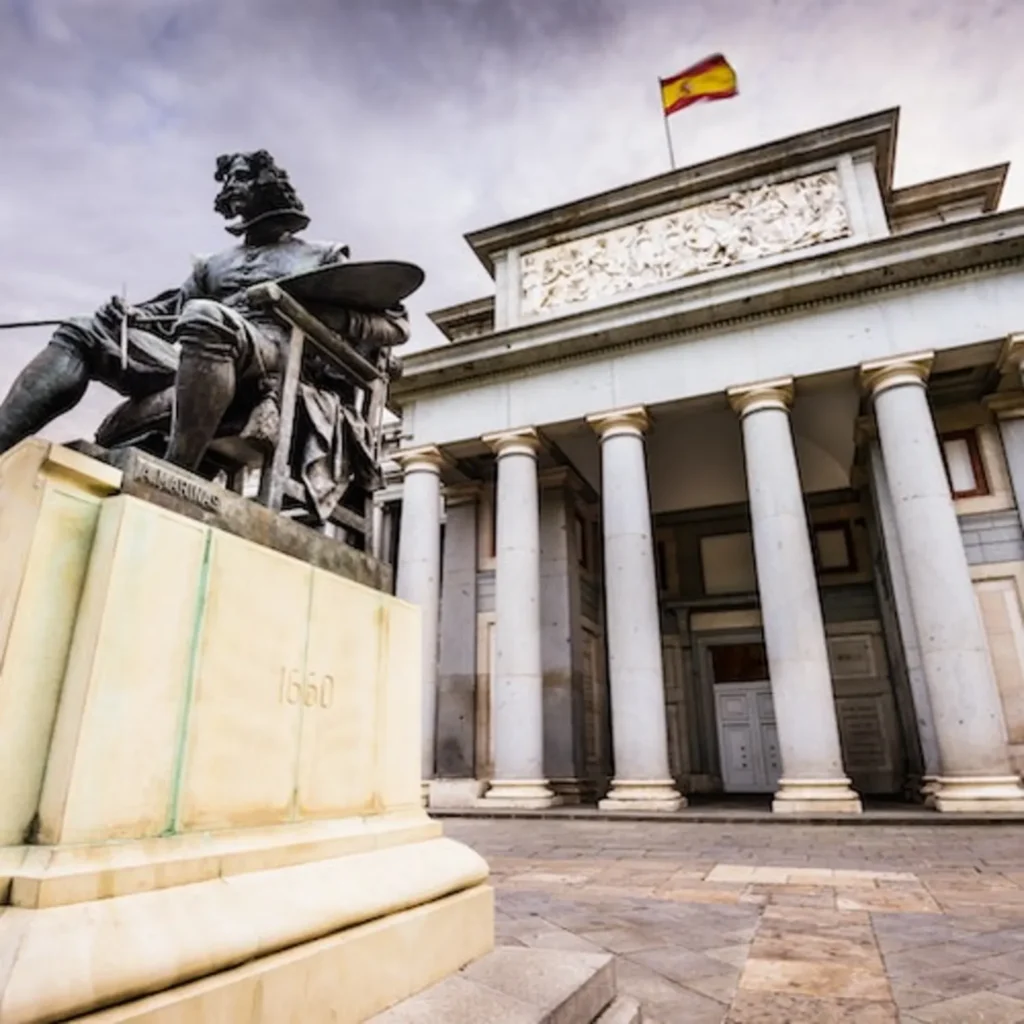
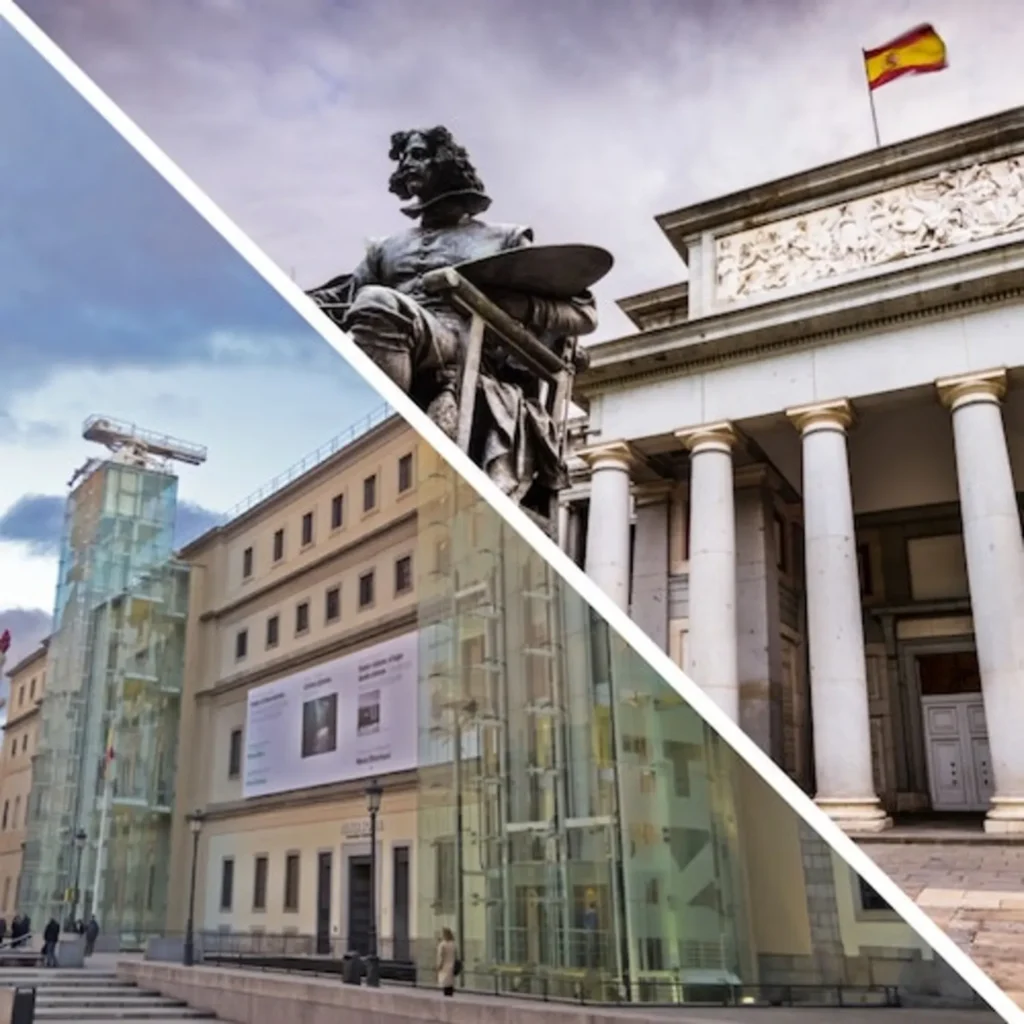
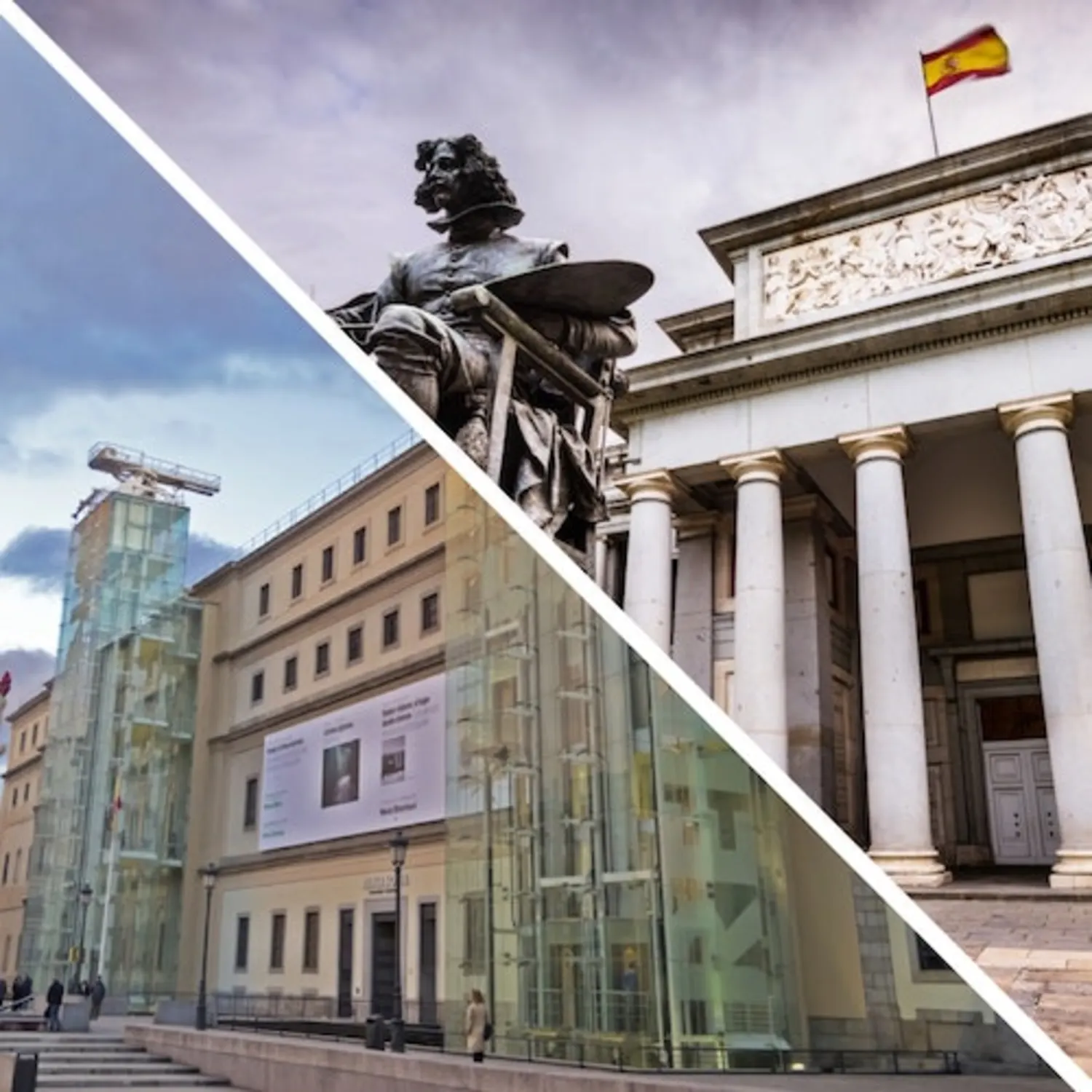
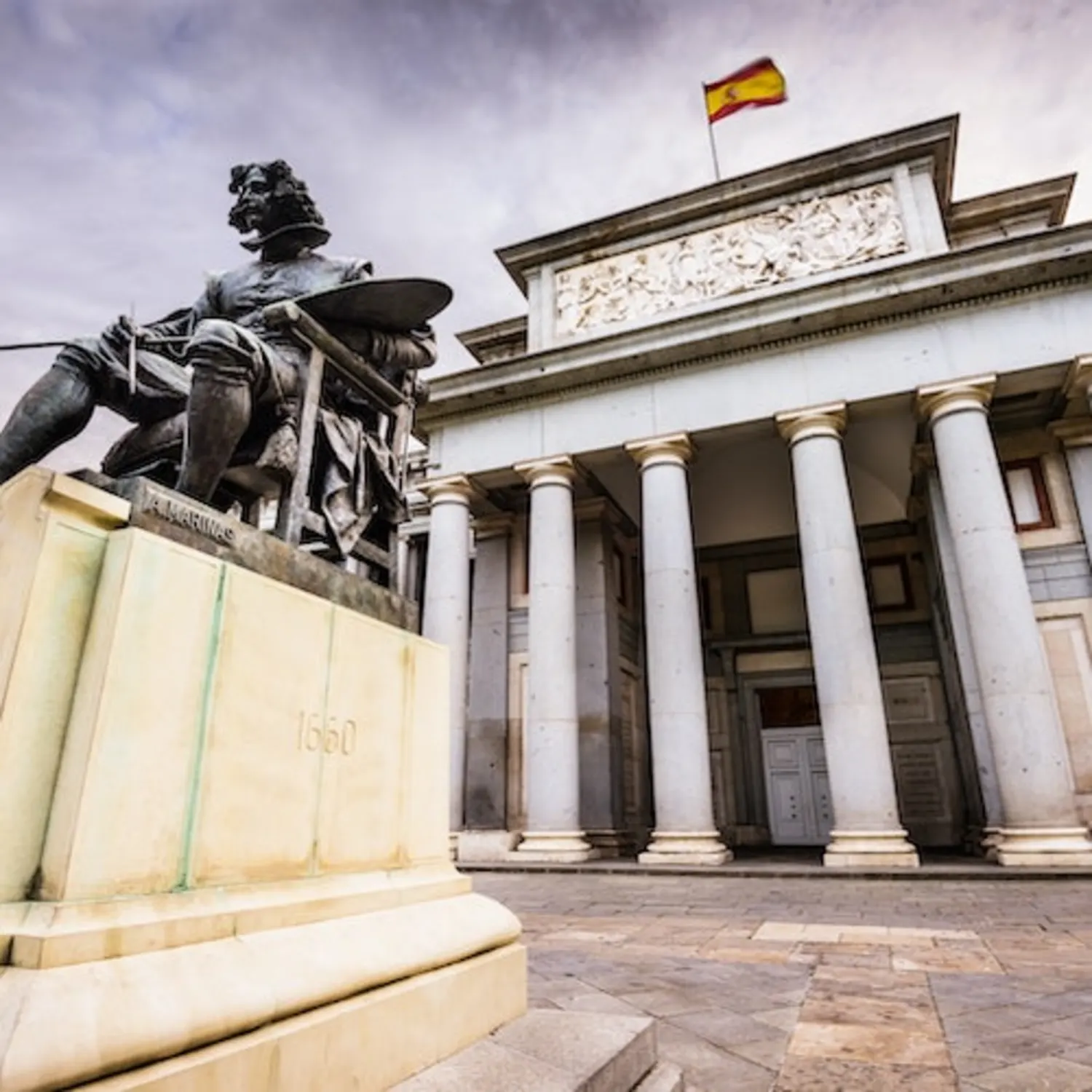
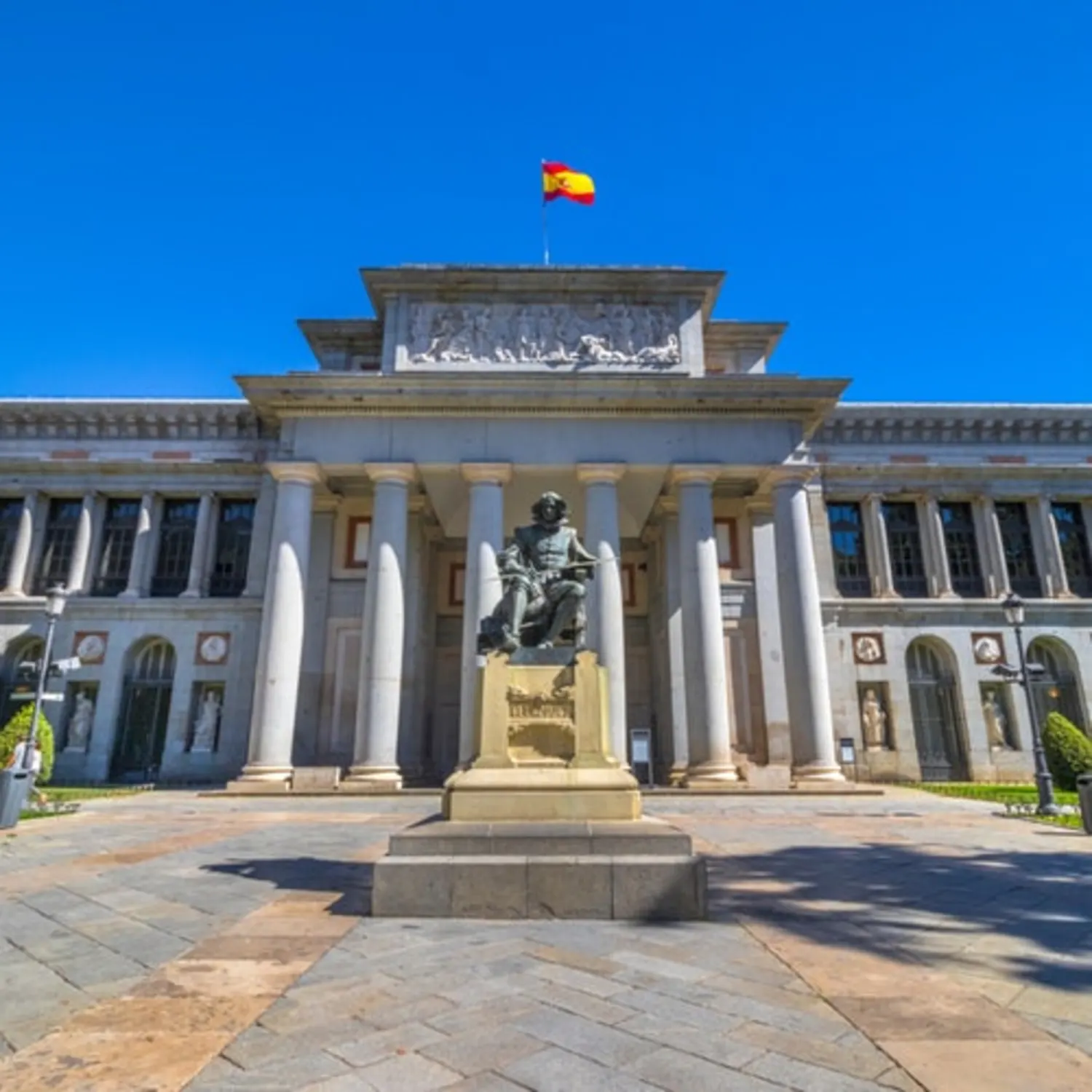
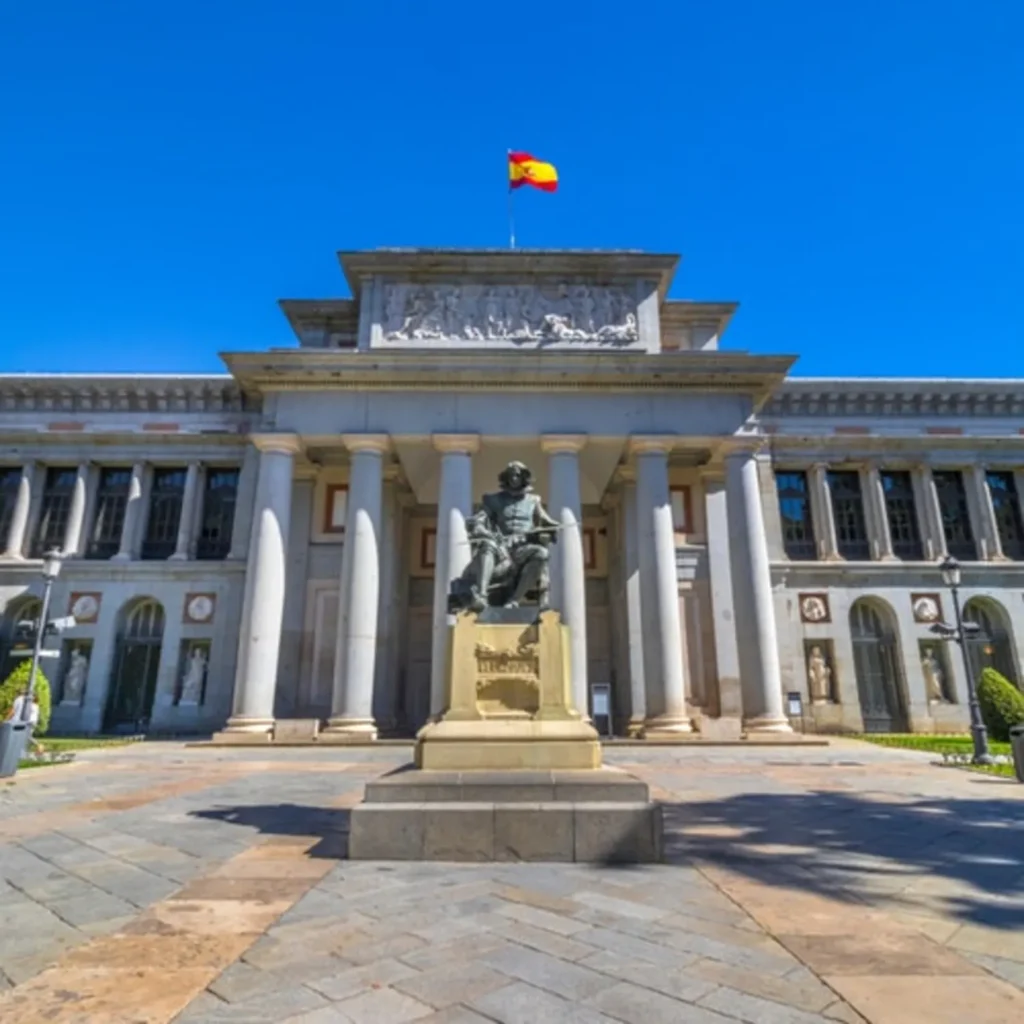
Statue of Velázquez in front of the Prado Museum

On the back wall, a mirror reflects Philip IV and Mariana of Austria. They seem to stand where the visitor stands, watching the scene, which is why the painting is so often read as a picture about the act of seeing. The Prado describes it as one of Velázquez's most ambitious works: a believable room built with linear and aerial perspective and lit from several sources. It begins as a group portrait of the Infanta and the people around her, then moves towards history painting. The viewer ends up implicated in the scene, part of a moment that the painter, the princess and her parents all seem to share across the room.

From palace room to Room 012

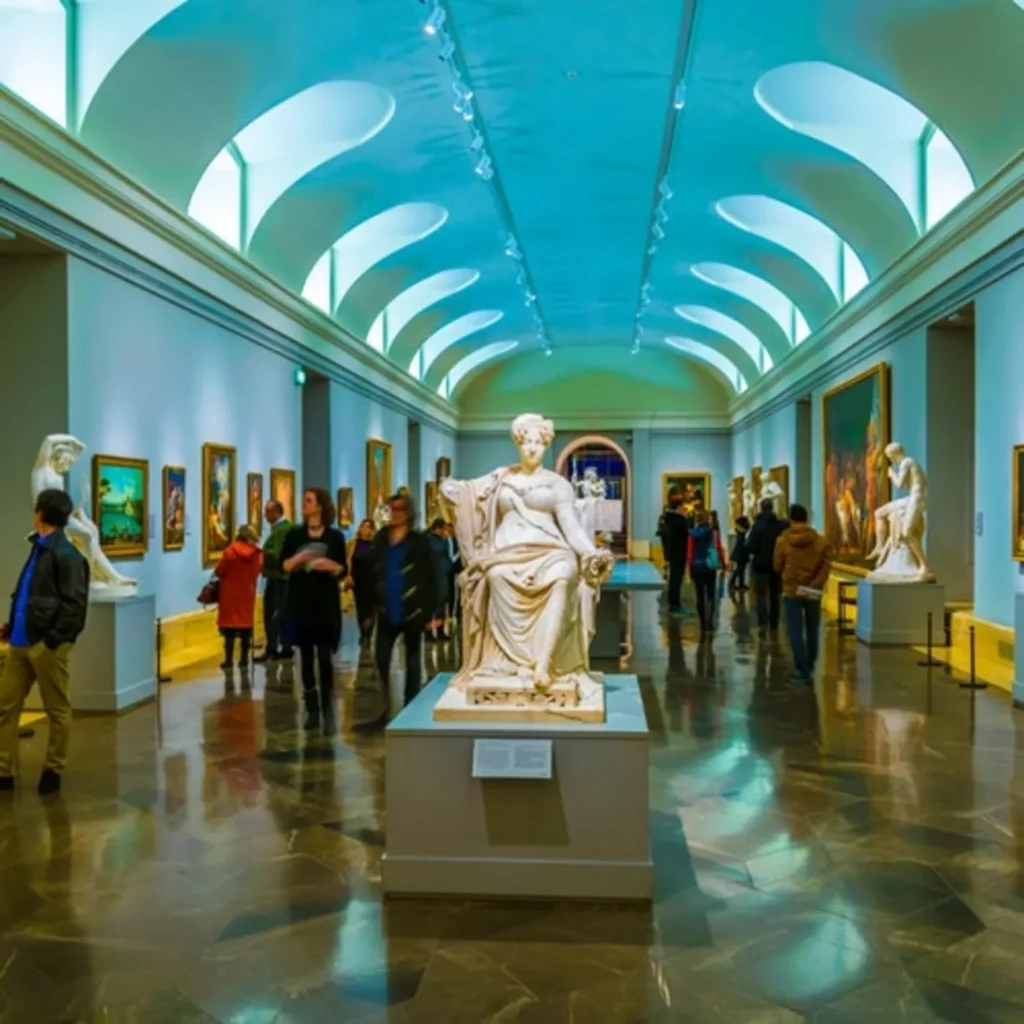
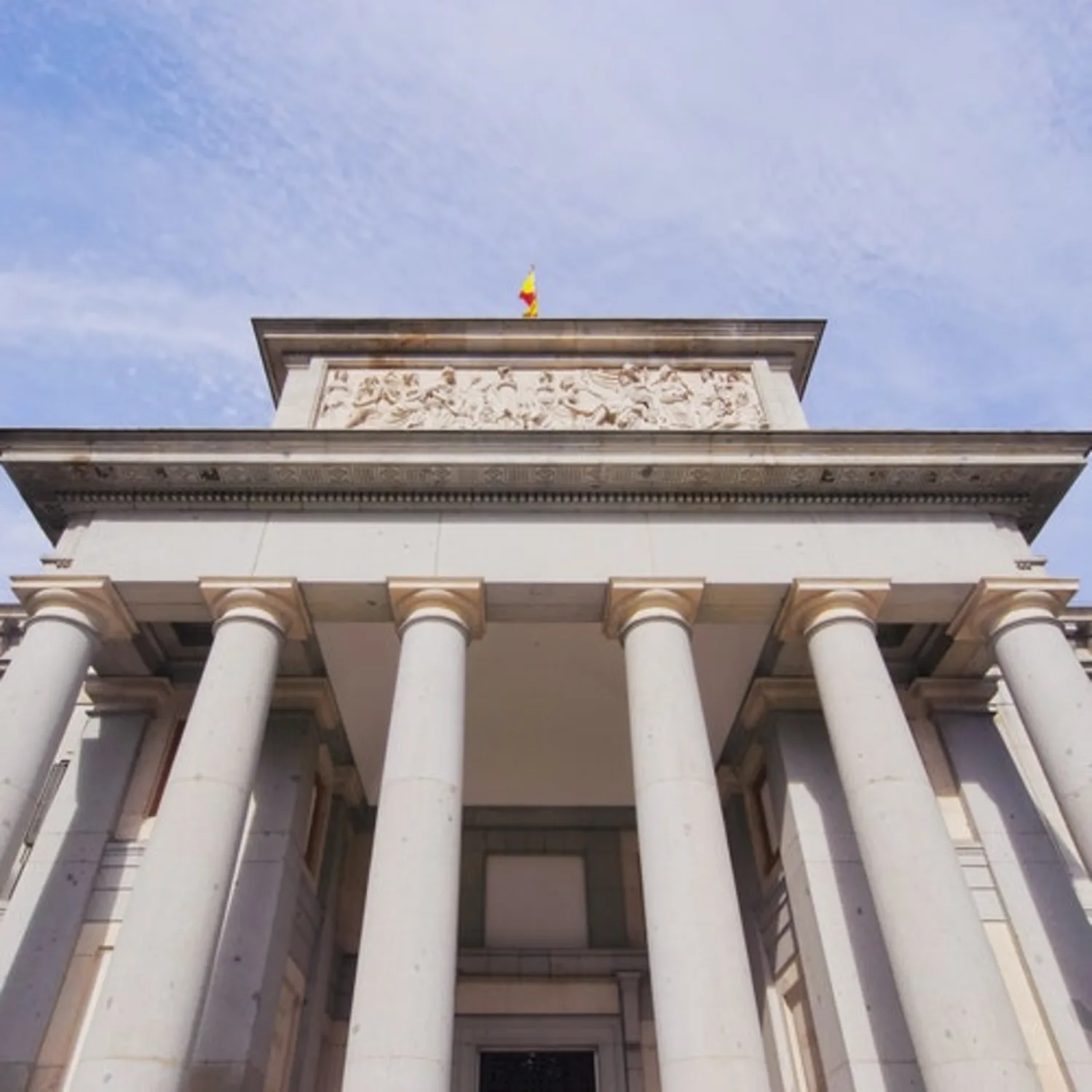
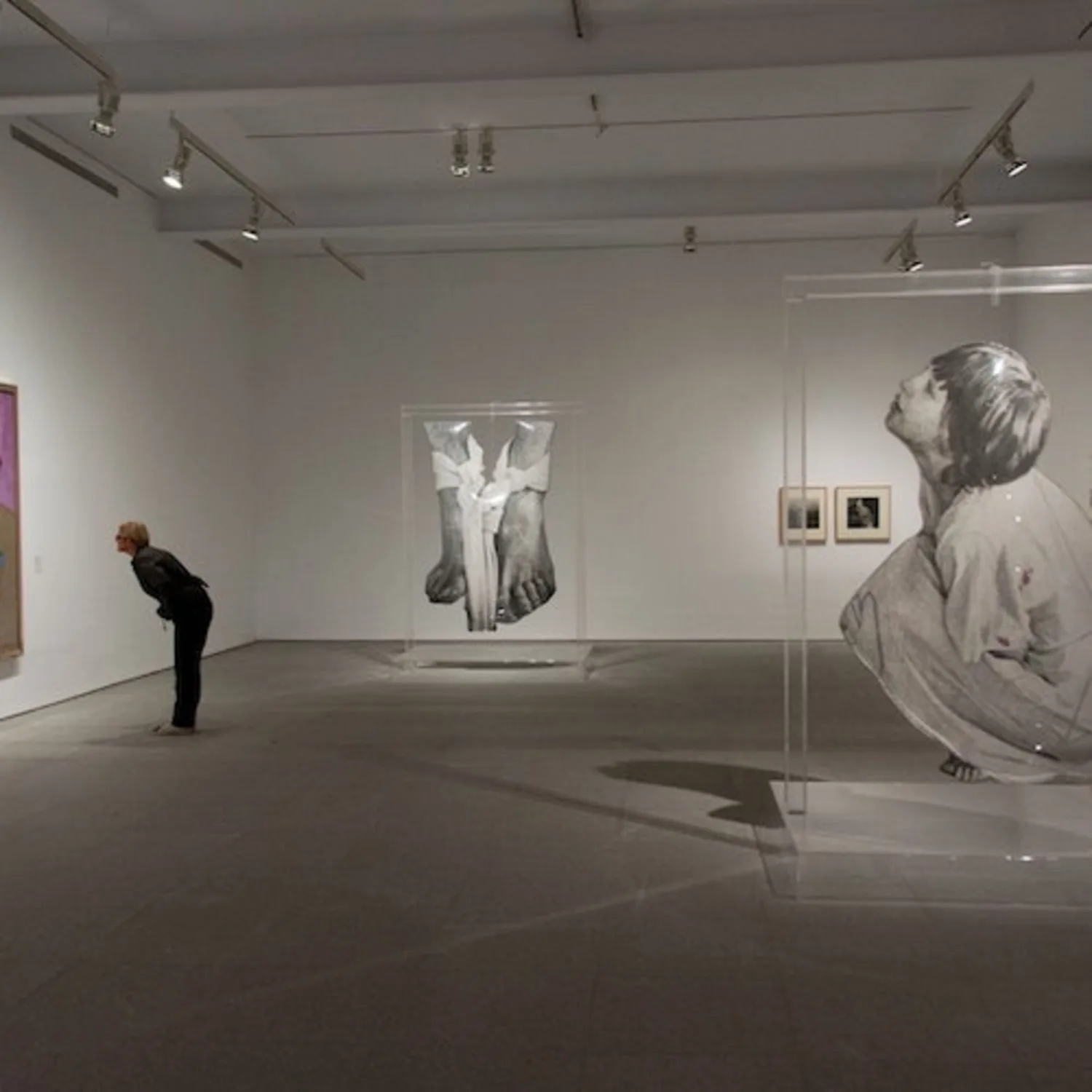
Sculpture gallery inside the Prado Museum

The painting stayed in royal hands for almost two centuries. It appears in the Alcázar inventory of 1700, used for the estate of Charles II, and then in the new Royal Palace in 1747, 1772, 1794 and 1814 to 1818. In 1724 Antonio Palomino gave it a section of its own in his lives of Spanish painters, the only single work in the book treated that way, and he named most of the figures. Early records describe the scene rather than title it. The name only settles in the Real Museo inventory of 1857, number 155, which calls it the picture of Las Meninas, decades after the museum opened.

4.7
(30)

Prado Museum Tickets

Highlights

Explore masterpieces by renowned Spanish and international artists.

Enjoy direct entry to the museum’s permanent collection through a dedicated entrance.

Discover over 1,500 artworks on display from a vast collection exceeding 7,000 pieces.

Avoid long queues with this entry ticket.

Experience one of the world’s leading art museums, comparable to the Louvre and the Met.
4.7
(9)

Prado and Reina Sofía Museums: Skip-the-Line + Guided Tour Ticket

Highlights

Avoid waiting in line at both museums.

Join a knowledgeable guide who speaks Spanish.

Discover iconic Spanish artworks from the 16th to 20th centuries.

Enjoy a comprehensive 4-hour tour covering major masterpieces.

Visit both the Prado and Reina Sofía museums in one trip.
4.7
(21)

Prado, Reina Sofia and Thyssen: Paseo del Arte Season Tickets

Highlights

Avoid lengthy queues with express access.

Visit three top museums located close to each other.

Save up to 20% compared to individual ticket purchases.

Experience some of the world’s finest art collections.

Flexible entry times and dates for your convenience.
See Las Meninas in Room 012

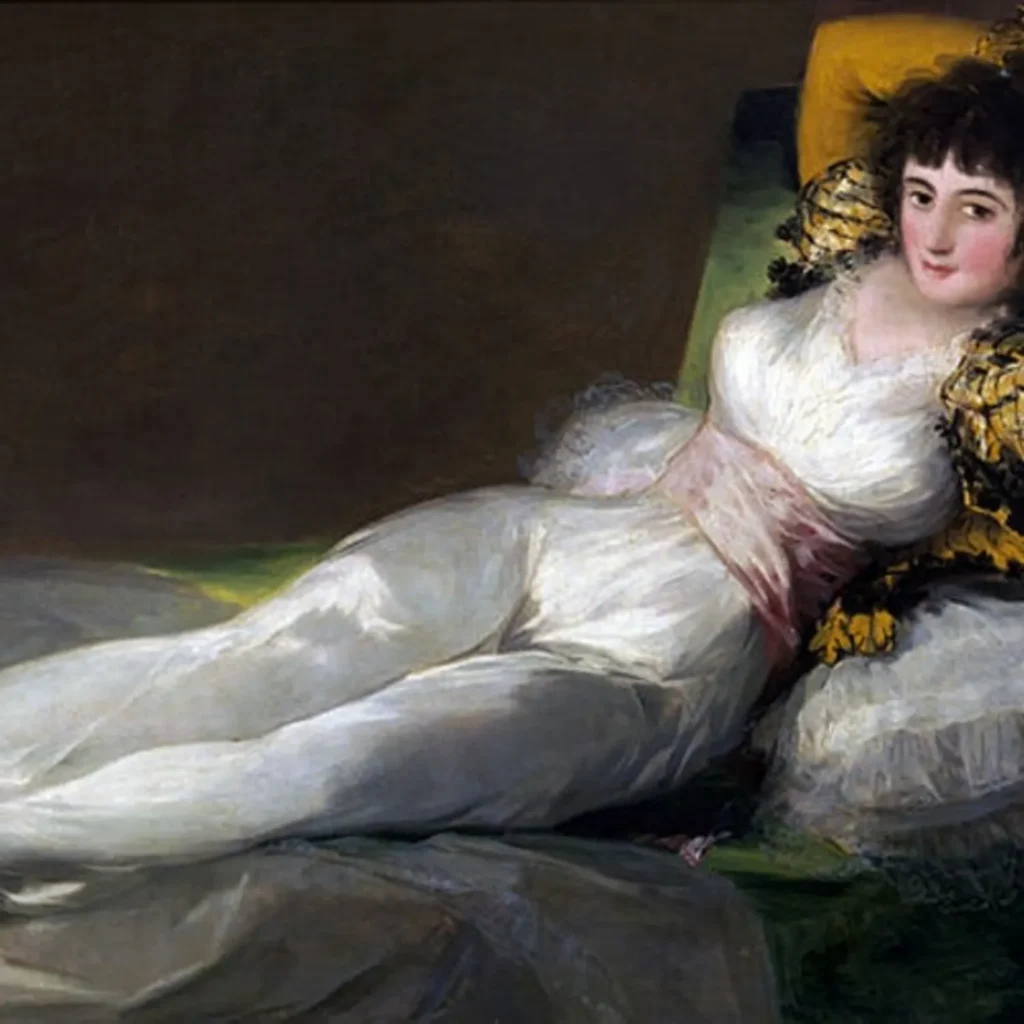
Give yourself time to stand where the royal couple would have stood, then move closer to see how loosely the dresses are painted. Court portraiture in Madrid continued after Velázquez: later in the century, Carreño de Miranda painted Eugenia Martínez Vallejo for Charles II, and both portraits hang in the Prado.

Las Meninas FAQs

Where is Las Meninas in the Prado Museum?

Las Meninas hangs in Room 012 of the Museo Nacional del Prado in Madrid.

When was Las Meninas painted?

Velázquez painted it in 1656, in the Cuarto del Príncipe of the Alcázar of Madrid, the same room shown in the picture. The date and place come from Antonio Palomino's account of 1724.

Who are the people in Las Meninas?

The Infanta Margarita, her maids of honour María Agustina Sarmiento and Isabel de Velasco, Mari Bárbola, Nicolasito Pertusato, Marcela de Ulloa, a guardadamas, the chamberlain José Nieto and Velázquez himself. Philip IV and Mariana of Austria appear in the mirror.

What does Las Meninas mean?

Meninas were the young maids of honour who served at the Spanish court. The painting takes its name from the two who attend the Infanta. The title only appears in the 1857 Real Museo inventory; earlier records simply describe the scene.

Who is reflected in the mirror in Las Meninas?

King Philip IV and Queen Mariana of Austria, the Infanta's parents. They appear to stand outside the picture, in the place of the viewer, watching the scene.

How big is Las Meninas?

The canvas measures 318 cm high by 276 cm wide, which makes it one of the largest paintings Velázquez produced.

About this guide

This website offers official tickets for the venues listed, sold by Tourism Tickets. Please note, however, that it is not the official website of any of these venues.

The images and videos on this website may contain visual elements that have been created or enhanced using AI technology. They are provided for illustrative purposes only.